From the Grammar Police


Grand juries don’t investigate. Don’t just take it from us. Here’s the Horribly Wrong team’s corporate counsel: “A grand jury receives evidence from the prosecution and deliberates to determine whether an indictment should be issued.”
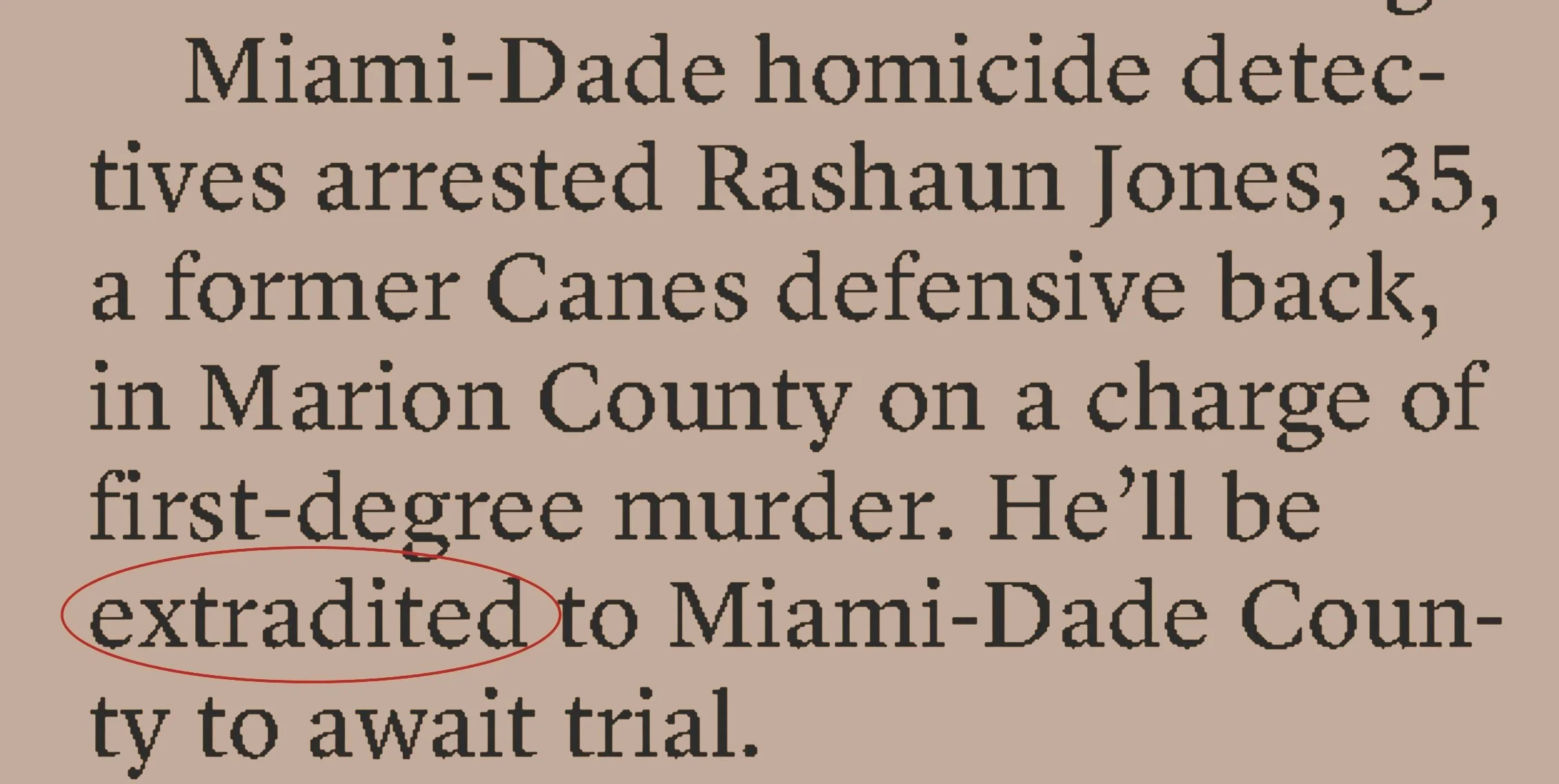
This is a bit of legalese, but reporters and editors should know better. Transferring someone between jurisdictions in the same state (Marion County is Ocala) is not extradition, which is a transfer from another state, territory, or country. In this case, just say “transferred.”
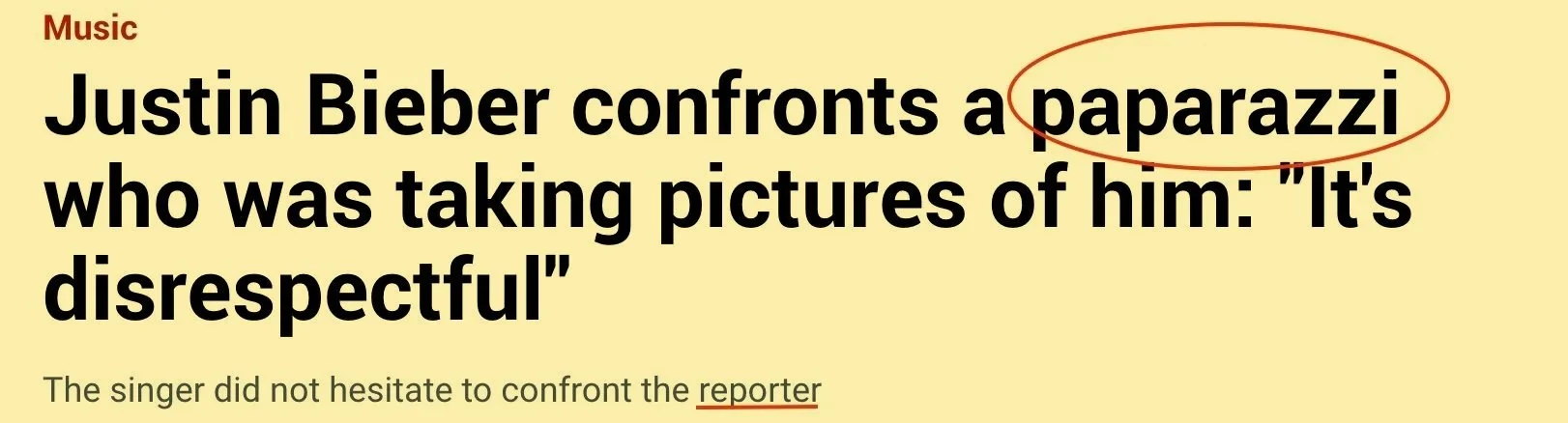
We’ve warned you about the dangers of using foreign words. Italian uses “i” for plural. It’s two paparazzi but one paparazzo.
(Personal note: Eliot was a reporter. News photographers take pictures of celebrities when there’s news. Paparazzi are not reporters and not news photographers. They are blood-sucking vermin who invade people’s privacy not for newsworthy purposes, but to sell a picture and make a buck.)
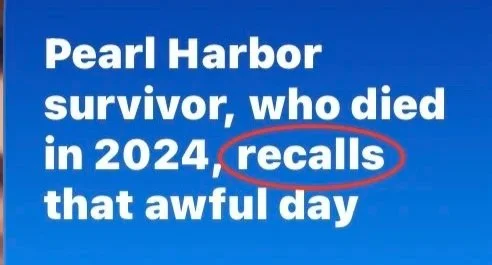
This is newspaper “inside baseball.” Headline writers like to put everything in present tense (see above.) But this one just didn’t work. Say “recalled.”

Joel Engelhardt
It’s hard not to envision something at Home Depot. How about, “China encircles Taiwan during huge military drill.” We’ve said before that while we encourage using fewer words, sometimes a few extra words creates more clarity.
Ellen Itzler
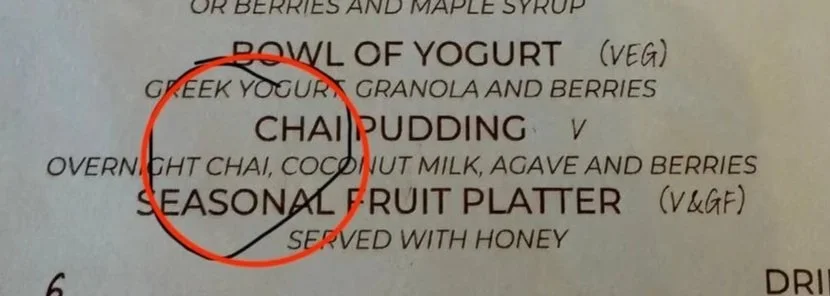
Chia is a seed often added to puddings, smoothies, and cereals. Chai is a beverage traditionally made with black tea, milk, spices, and sweetener.
Credit: Sara Haas
Readers: We said in our Jan. 4, 2026, segment that many of you still fight us on “tuna fish.” It turns out you still do! From readers:
”If it just said ‘tuna,’ to me they only have whole tuna to sell. ‘Tuna fish’ to me means chopped tuna with mayo and other things such as onions or celery.” - R.M.
“I have come to the conclusion that there are two types of this fish: Tuna which is red flesh, fresh and uncooked, or lightly seared version used in sushi, and to the brown or white cooked and chopped fish in a can to make tuna fish sandwiches. If clarity is the goal of writing then identifying these as two different applications of the same fish requires two different descriptive words so the reader know which is which. It seems that a common use standard may be acceptable here?” - A.F.
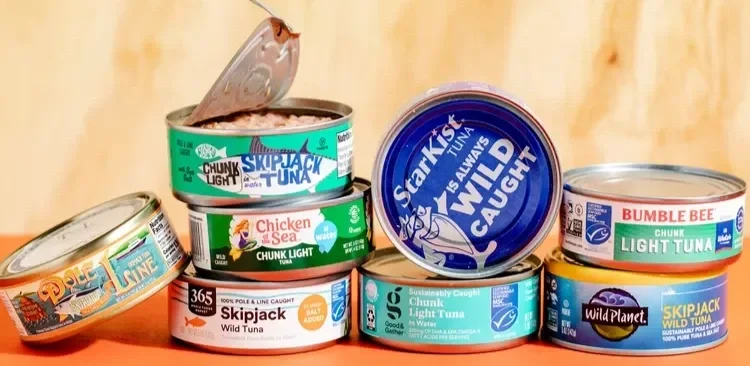
Our response: You differentiate between whole and canned tuna by saying “canned tuna.” That’s what the industry does. Except when it just says “tuna” (see photo). Also, no deli will ask if you meant a whole tuna. “Tuna fish” is grammatically wrong. Period. But, despite our whimsical headline, “Grammar Police,” we have no enforcement powers. We just tell you what's grammatically correct. Readers?
And we go to the video archives! Click for Segment 99: More “Huh?”
Readers: "Something Went Horribly Wrong" features samples of bad writing we see nearly every day. You can participate! Be our duly deputized “grammar police.” Your motto: “To protect and correct.” Send in your photos of store signs, street signs, menus, TV news graphics, newspaper headlines, tweets, and so on. It doesn’t have to be a grammatical error. It can be just what we call “cowardly writing.” Include your name and home town so we can credit you properly. You're free to add a comment, although we reserve the right to edit or omit. Now get out there! Send to Eliot@eliotkleinberg.com
Haven’t signed up for our newsletter yet? Do it now! And tell your friends!
NOTE: Eliot and Lou Ann are available for speaking engagements, and can travel. Reach us through the comments section. Just think of all of your employees getting back to work on a Monday, their heads filled with all the ways we’ve shown them to be better communicators!